
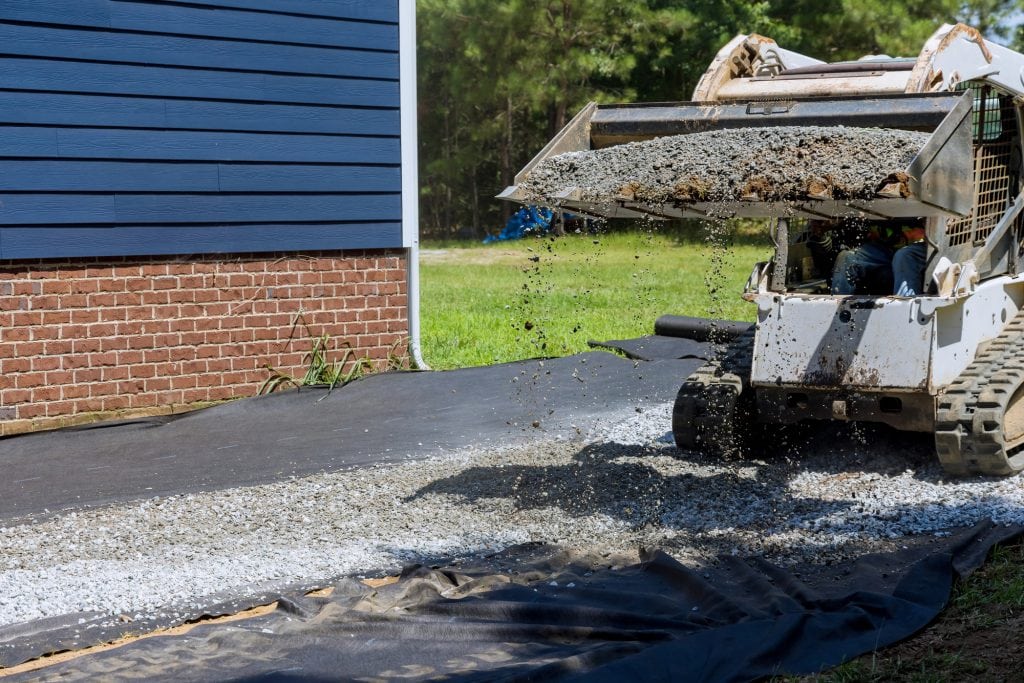
Tired of potholes and mud every spring? Here’s what you’ll learn: how to keep an Anchorage gravel driveway solid through freeze-up and breakup, what maintenance it needs, and when to regrade or add gravel.
Gravel driveway maintenance in Anchorage comes down to grading, drainage, and gravel replenishment—done on a seasonal rhythm. Regular regrading fills ruts and restores the crown that sheds water, good drainage keeps the base from turning to mush during spring breakup, and fresh gravel replaces what plows and runoff carry away. Stay ahead of these and your driveway stays firm; fall behind and potholes and mud take over each thaw.
What does gravel driveway maintenance involve?
Keeping a gravel driveway solid in South Central Alaska means a few recurring tasks, timed to the seasons:
- Regrading to fill ruts and potholes and rebuild the crown
- Adding gravel to replace material lost to plowing, traffic, and washout
- Maintaining drainage—ditches, culverts, and slope—so water leaves the surface
- Managing dust in dry summer stretches
- Snow removal done without scraping away the gravel surface
Most driveways need attention at least in spring after breakup and again in late summer or fall before freeze-up.
Why is spring breakup so hard on gravel driveways?
Spring breakup is the toughest season for any Anchorage driveway. Through winter, the ground freezes deep; as it thaws from the top down, meltwater is trapped above still-frozen soil with nowhere to drain. That saturated base loses strength, and traffic pushes ruts, potholes, and soft spots into the surface. Driveways with poor drainage or a worn-out crown suffer the most, because water sits instead of running off. Good drainage and a proper crown are what carry a gravel driveway through breakup intact.
How often should you regrade and add gravel?
The right schedule depends on traffic, slope, drainage, and how much gravel has been lost. As a guide:
| Task | Typical timing |
|---|---|
| Regrade (crown + fill ruts) | Spring after breakup; again in fall as needed |
| Add gravel / top course | Every 1–3 years, or when the base shows through |
| Clean ditches and culverts | Spring and fall |
| Dust control | Dry summer periods |
A driveway that’s rutting or holding water sooner than this usually has a drainage or base problem worth correcting.
When do you need more than routine maintenance?
Sometimes grading isn’t enough. If your driveway develops the same potholes right after every regrade, stays muddy long after rain, or has a base that has thinned to bare subgrade, it needs rebuilding—not just resurfacing. That means correcting drainage, re-establishing a proper crown and base, and adding the right gravel depth. Because gravel driveways share the same groundwork as broader site work, excavation services can regrade, re-base, and fix drainage in one visit (land grading is the closely related service). Our guide to gravel driveway installation covers how a durable base is built from the start. Long or sloped driveways in Eagle River and on the Hillside especially benefit from drainage upgrades that stop washout.
Which approach is right for your driveway?
If your driveway sheds water and just needs ruts filled, seasonal regrading plus occasional gravel keeps it in shape. If it holds water, ruts immediately, or shows bare subgrade, invest in drainage correction and re-basing so routine maintenance actually holds. Either way, the cheapest driveway is the one you maintain before breakup, not the one you rebuild after it fails.
Keep your driveway solid. Get a free estimate
Excavate Alaska proudly serves Anchorage and South Central Alaska—including Eagle River, Chugiak, Girdwood, Wasilla, and Palmer (plus the wider Anchorage metro and Matanuska-Susitna Borough). We regrade, re-base, and fix drainage so your gravel driveway survives every breakup. Call (907) 336-7434 or visit our contact page for a no-pressure free estimate.
Frequently Asked Questions
How often should a gravel driveway be regraded in Anchorage?
Most gravel driveways need regrading in spring after breakup to fill ruts and rebuild the crown, and again in fall as needed before freeze-up. Fresh gravel is typically added every one to three years, or sooner if the base shows through. Driveways that rut faster usually have a drainage or base problem.
Why does my gravel driveway get so muddy in spring?
Spring breakup thaws the ground from the top down, trapping meltwater above still-frozen soil with nowhere to drain. The saturated base loses strength, so traffic pushes ruts and soft spots into the surface. Driveways with poor drainage or a worn crown hold water instead of shedding it, which makes the mud worse.
How do I stop potholes from coming back on my gravel driveway?
Recurring potholes usually mean a drainage or base problem, not just a surface issue. Maintaining a proper crown so water runs off, keeping ditches and culverts clear, and ensuring adequate gravel depth all help. If potholes return right after every regrade, the driveway likely needs re-basing and drainage correction.
When does a gravel driveway need rebuilding instead of grading?
Rebuild when the driveway ruts immediately after grading, stays muddy long after rain, or has thinned to bare subgrade. Those signs mean the base and drainage are failing, so resurfacing alone won’t last. Rebuilding restores the crown, corrects drainage, and lays the right gravel depth.
Can snow removal damage a gravel driveway?
Yes. Plowing or scraping too aggressively strips away the gravel surface along with the snow, thinning the driveway over time. Plowing at the correct height and topping up gravel that gets displaced each winter keeps the surface intact and reduces spring maintenance.

As the owner and founder of Excavate Alaska, I’m passionate about delivering reliable, high-quality excavation services to the Anchorage community and beyond. With over a decade of hands-on experience in the industry, I’ve built Excavate Alaska on the values of integrity, professionalism, and customer-first service. My team and I specialize in site preparation, land clearing, grading, trench digging, and full-scale excavation for both residential and commercial projects.