
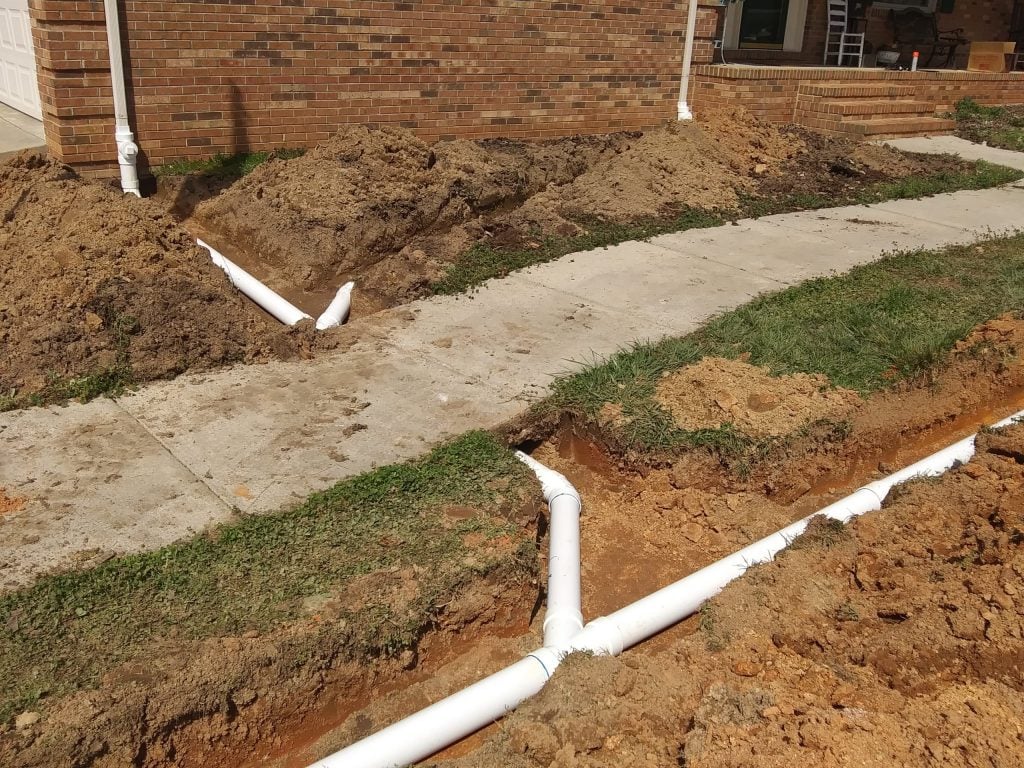
Choosing the right Anchorage drainage solutions starts with understanding how water moves across your property. What looks like a small puddle or soggy patch can point to a much larger issue below the surface.
Water problems rarely stay small for long. Poor drainage can weaken soil, damage landscaping, create muddy areas, wear down hardscape edges, and increase pressure around foundations. In Anchorage, these issues can become even more frustrating because changing weather, moisture, and seasonal ground conditions all affect how water behaves.
That is why drainage planning should never be treated as an afterthought. The best solution is not always the biggest or most expensive one. The right answer depends on your property layout, slope, soil, runoff patterns, and the source of the water problem.
This guide explains how to choose the right drainage approach for your Anchorage property, what signs to watch for, and which site conditions matter most before any work begins.
Why Drainage Matters So Much in Anchorage
Water has a way of finding weak points on a property. It moves into low spots, settles near structures, washes through soft areas, and follows the easiest path downhill. When drainage is poor, that water often stays where you do not want it.
For property owners, drainage affects far more than appearance. It can influence:
- Yard usability
- Foundation conditions
- Surface stability
- Landscaping health
- Erosion control
- Walkway and driveway performance
In Anchorage, drainage planning matters because outdoor surfaces and soil conditions can change throughout the year. What starts as a minor wet area can turn into repeated standing water, unstable ground, or ongoing maintenance trouble.
Strong Anchorage drainage solutions help direct water away from high-risk areas and support better long-term performance across the property.
Why Anchorage Yards Stay Soggy
Most soggy yards in Anchorage come from a combination of causes, not just one:
- Poor grading that sends water toward the house or traps it in low spots
- Glacial silt and compacted soil that drain slowly and stay soft for days
- Snowmelt and spring breakup, when thawed topsoil sits over still-frozen ground and meltwater has nowhere to soak in
- A high water table in some neighborhoods
- Downspouts dumping roof water right beside the foundation
Hillside and Eagle River lots add slope to the mix, concentrating runoff from above.
Quick Wins That Solve Many Drainage Problems
Before buying any drain hardware, check these two things. They fix a surprising number of wet yards:
- Downspouts: carry roof water 10–15 feet from the foundation in solid (not perforated) pipe sloped at least 1–2 percent. Go farther if the yard pitches back toward the house.
- Grade at the house: the ground should fall about 2–5 percent away from the structure for the first 10 feet. Settled backfill along the foundation is a common culprit.
Also keep snow piles away from walls, clean gutters each fall, and check outlets after hard freezes.
Start by Identifying the Actual Water Problem
The first step is not choosing a product or drain type. The first step is figuring out exactly what is happening.
Many property owners know they have a drainage issue, but the visible symptom may not be the actual source. For example, a soggy lawn may be caused by runoff from a slope. Water near the foundation may actually start at a downspout discharge point. A muddy side yard may result from poor grading rather than a lack of drainage hardware.
Before selecting Anchorage drainage solutions, ask these questions:
- Where does the water show up?
- When does it happen?
- Does it occur after rainfall, snowmelt, or all seasons?
- Is the problem isolated or spread across the property?
- Is the water sitting on the surface, or is it soaking into certain areas?
Solving the wrong problem wastes time and money. Solving the real one starts with careful observation.
Watch for Common Signs of Poor Drainage
Some drainage issues are obvious. Others build slowly and are easy to ignore until the damage gets worse.
Common signs include:
Standing water
Puddles that remain long after wet weather can show that water has nowhere to go.
Soggy lawn areas
Soft ground, muddy patches, or grass that struggles to recover often points to excess moisture.
Water near the foundation
If water collects near the home, it may increase the long-term risk around the structure.
Washed-out landscaping
Soil movement, mulch displacement, or exposed roots can all signal runoff problems.
Erosion on slopes
Water moving downhill too quickly can wear away soil and destabilize sections of the yard.
Slippery walkways or drive edges
Poor drainage can increase water buildup near commonly used surfaces.
Repeated wet spots near downspouts
This may suggest runoff is not being carried far enough away.
Each of these signs can call for a different solution. That is why the right Anchorage drainage solutions must match the source and pattern of the issue.
Understand How Water Moves Across Your Property
Every property has its own drainage pattern. Water follows grade, soil conditions, and surface obstacles. That means two nearby homes can have very different drainage needs.
To choose the right solution, it helps to look at the full site rather than focusing only on the wettest area.
Pay attention to:
High points and low points
Water naturally moves downhill and settles in low areas.
Hard surfaces
Driveways, walkways, patios, and compacted ground can speed up runoff and redirect it.
Roof runoff
A large amount of water can come off the roof and collect in concentrated areas.
Sloped ground
Slopes can quickly carry water toward lawns, structures, or lower yard areas.
Existing landscaping
Beds, edging, mulch, and plantings can either help or block water flow.
A good drainage plan works with the property’s natural movement rather than fighting it without a strategy.
Check Whether Grading Is the Main Issue
Many drainage problems begin with grading. If the ground is sloped the wrong way or has uneven low spots, water can collect where it should not.
Grading controls the direction of surface water. When the grade is properly sloped to support runoff, water can move away from structures and out of problem areas more effectively. When the grade is poor, even added drains may not perform well enough on their own.
Signs that grading may be part of the problem include:
- Water is moving toward the home
- Low areas in the yard that stay wet
- Surface puddling across open ground
- Uneven runoff between landscape zones
- Washout along edges and slopes
In many cases, the best Anchorage drainage solutions combine water collection with improved grading rather than relying on a single method.
Know the Role of Soil Conditions
Soil affects how fast water drains, how long moisture stays in place, and how stable the ground remains after repeated wet periods. Some soils allow water to move through more easily, while others hold moisture longer and create soft conditions.
This matters because drainage is not only about moving water across the surface. It is also about how the ground handles moisture below the surface.
Soil-related drainage concerns can lead to:
- Slow drainage in lawn areas
- Surface softness after wet weather
- Persistent muddy zones
- Settlement near hardscape edges
- Reduced yard usability
When choosing Anchorage drainage solutions, soil conditions should always be considered. A system that works well on one property may not perform the same way on another if the ground behaves differently.
Match the Solution to the Source of Water
Not all drainage problems need the same fix. A smart drainage plan depends on the source of the water.
Here are a few common categories:
Roof runoff issues
If water gathers near the home after leaving the roof, the focus may need to be on improving how runoff is collected and directed away from the home.
Surface pooling in open yard areas
This often points to grading issues, poor runoff paths, or low sections that trap water.
Water movement down a slope
Sloped properties may need a way to intercept or redirect water before it reaches lower areas.
Constant wetness in narrow side yards
Tight areas can trap water when grading, runoff, and drainage space are limited.
Erosion around landscaping or edges
This usually means water is moving too fast or too directly through one section.
The most effective Anchorage drainage solutions are the ones chosen for the actual cause, not just the visible symptom.
Consider Surface Drainage and Subsurface Drainage
A lot of property owners focus only on what they can see. But some water problems happen on the surface, while others develop below grade.
Surface drainage
This manages water that travels over the ground surface. It usually involves guiding water away through grading, channels, collection points, or sloped surfaces.
Subsurface drainage
This addresses water in the soil or below the surface level. It can help with moisture buildup in areas where water lingers beneath the top layer.
Some properties need one or the other. Others benefit from both working together.
Choosing between them depends on whether the water is:
- Pooling on top of the ground
- Saturating soil over time
- Affecting areas near structures
- Coming from repeated runoff
- Building up in a hidden low zone
A good drainage plan does not guess. It looks at where the water is and responds with the right method.
Common Drainage Solutions and When They Fit
| Solution | Best for |
|---|---|
| Regrading or crowning | Water flowing toward the house or pooling in low spots |
| Downspout extensions | Wet soil and erosion at the corners of the house |
| Swale | Steering surface water around the house or along a fence line to an outlet |
| Surface or channel drain | Water sitting on top of patios, driveway edges, and walks |
| Catch basin with piping | A low spot that collects water, piped to a safe outlet |
| French drain | Ground that stays saturated below the surface |
| Dry well | Only where the soil can absorb the volume; often a poor fit on slow-draining silt |
| Sump pump | Sites where water can’t drain away by gravity |
French drain or surface drain? Surface drains handle water sitting on top of the ground. French drains handle water moving through the soil. Many Anchorage yards need both. A French drain only works if it is built right: washed angular drain rock rather than pea gravel, nonwoven fabric against the native soil instead of a fully wrapped trench, perforated pipe with a steady slope, and cleanouts so it can be flushed.
No place to drain? When there’s nowhere for water to go by gravity, a sump basin with a pump, a check valve, a high-water alarm, backup power, and a freeze-protected outlet can move it instead.
When to schedule: late spring through early fall is the best window. Winter installs are possible but need more compaction effort and careful handling of frozen ground.
Think About the Areas You Need to Protect Most
One of the easiest ways to narrow down your drainage priorities is to ask what part of the property needs the most protection.
For some homeowners, the biggest concern is water near the foundation. For others, it may be a backyard that stays muddy, a side yard with runoff issues, or a slope that keeps eroding.
Priority protection zones often include:
- Foundation areas
- Walkways and access paths
- Driveway edges
- Lawn sections are often used
- Retaining zones
- Outdoor living areas
- Garden and landscape beds
The best Anchorage drainage solutions should protect the areas that matter most to how the property is used every day.
Do Not Treat Downspouts as a Small Detail
Downspouts play a major part in drainage performance. Roof runoff can discharge a large volume of water into a single concentrated area, and if that water is not moved far enough away, it can cause recurring problems.
Poor downspout runoff management can lead to:
- Wet soil beside the home
- Erosion near corners
- Water reaching walkways
- Foundation-area moisture buildup
- Saturated planting beds
A property can have decent grading overall and still have drainage problems due to runoff at a few concentrated points.
That is why many Anchorage drainage solutions begin with evaluating how roof water leaves the structure and where it goes next.
Pay Extra Attention to Sloped Properties
Slopes add another layer to drainage planning. Water moves faster downhill, and that can increase erosion, washout, and water concentration in lower areas.
On a sloped property, the question is not only where the water starts, but also where it ends. It is also where it ends up and how much force it carries along the way.
Drainage planning on slopes may involve:
- Slowing runoff
- Redirecting water safely
- Protecting lower yard areas
- Preventing soil loss
- Supporting slope stability
A slope that appears stable in dry conditions can still experience drainage problems during wet periods. That is why slope-related water movement should be taken seriously when evaluating Anchorage drainage solutions.
Consider How Drainage Affects Hardscapes
Drainage is often discussed in relation to lawns and foundations, but hardscape is affected, too. Walkways, patios, retaining walls, and driveway edges can all suffer when water is poorly managed.
Common hardscape-related issues include:
- Water collecting on concrete surfaces
- Washed-out edges near slabs
- Soil loss beside pavers or steps
- Icy walking areas during cold periods
- Uneven settling near transitions
A property with new concrete or landscape improvements still needs good drainage. Otherwise, even well-built surfaces can wear down faster than expected.
That is why Anchorage drainage solutions should be considered part of the full property system, not a separate fix for one wet corner.
Think Long Term Instead of Only Solving the Current Symptom
A fast fix may help for a short time, but long-term drainage performance depends on planning. If the property has recurring runoff patterns, low-lying areas, or moisture issues near important structures, the solution should be built around lasting performance.
Long-term thinking means looking at:
- Where water comes from
- Where it needs to go
- How the property changes through the seasons
- Whether multiple issues connect
- Which areas are most at risk over time
Sometimes the right answer is a single improvement. In other cases, it is a combination of grading, collection, and redirection.
Strong Anchorage drainage solutions are not just reactive. They are planned with future conditions in mind.
Common Mistakes When Choosing Drainage Solutions
Choosing the wrong drainage strategy often happens when property owners focus only on the wet spot rather than the broader pattern.
Here are some common mistakes:
Ignoring the source
Treating the puddle without addressing its source usually leads to recurring problems.
Skipping grading evaluation
Without checking the grade, even added drainage features may underperform.
Focusing only on one storm or season
A solution should work through normal seasonal changes, not just one recent event.
Overlooking nearby structures and surfaces
Water affects more than lawns. It can create trouble near walkways, patios, and foundation areas, too.
Choosing appearance over function
Drainage needs to work well first. Visual finish matters, but performance matters more.
Avoiding these mistakes gives you a better chance of choosing Anchorage drainage solutions that actually solve the issue.
When a Property Needs More Than One Drainage Fix
Some properties have one clear problem area. Others have a chain of connected issues.
For example:
- Roof runoff may saturate soil near the home
- That moisture may move toward a walkway
- The walkway may then direct water into a low lawn area
- The lawn may hold water because the grading is weak
In that case, solving only one point may not be enough.
This is why full-site thinking matters. When water problems connect across multiple zones, the best solution often combines several improvements that work together.
A coordinated plan can better protect the property than isolated fixes added one at a time.
Why Site Evaluation Matters Before Choosing a Drainage Approach
Every drainage decision should start with a site-specific look at the property. That includes slope, layout, runoff points, low spots, and the relationship between structures and open ground.
A site evaluation helps answer:
- Is the issue surface water or subsurface moisture?
- Is grading helping or hurting?
- Is runoff concentrated in one place?
- Are there multiple connected problem areas?
- Which areas should be protected first?
The clearer the evaluation, the easier it is to choose practical Anchorage drainage solutions that match the property.
Without that step, it is easy to spend money on the wrong fix.
Professional Help Can Prevent Costly Guesswork
Drainage issues are often more layered than they appear from the surface. Water may travel underground, spread from one zone to another, or show up far from where the problem starts.
That is why professional evaluation and planning can make a major difference. The right team can look at the property as a system, identify the root cause, and recommend a solution that fits the site rather than offering a one-size-fits-all answer.
This is especially useful when the property has:
- Slope-related water movement
- Foundation-area moisture concerns
- Repeated standing water
- Erosion issues
- Multiple runoff sources
- Drainage problems affecting concrete or landscape features
The right approach can reduce repeat work, protect more of the property, and support better long-term results.
The Bottom Line on Anchorage Drainage
The right drainage choice starts with understanding your property, not guessing based on one wet area. Water problems can come from grading, runoff concentration, slope conditions, soil behavior, or a combination of several site issues.
That is why the best Anchorage drainage solutions are based on how water moves, where it collects, and which parts of the property need the most protection.
When drainage is planned properly, it can help reduce standing water, limit erosion, support foundation protection, and make outdoor areas easier to use year-round.
Whether the issue is surface pooling, roofline runoff, side-yard moisture, or slope-related washout, the key is choosing a solution that addresses the real cause of the problem. A well-planned drainage strategy can protect both the appearance and performance of your Anchorage property in the long run.
FAQs
1. What are the most common signs that a property needs drainage work?
Common signs include standing water, soggy lawn areas, erosion, water near the foundation, muddy side yards, and repeated wet spots after rainfall or snowmelt.
2. How do I know which drainage solution is right for my property?
The right solution depends on the source of the water, site grading, slope, soil conditions, and which part of the property is most affected. A proper site evaluation helps identify the best fit.
3. Can poor drainage damage areas other than the yard?
Yes. Poor drainage can affect foundations, walkways, driveway edges, landscaping, retaining areas, and other outdoor surfaces.
4. Why is grading important in drainage planning?
Grading controls how water moves across the property. If the grade is wrong, water can flow toward structures or collect in low spots instead of draining away.
5. Do some properties need more than one drainage solution?
Yes. Some properties have multiple connected issues, such as roof runoff, low-grade yard areas, and slope-related water movement. In those cases, a combined approach often works best.
6. Do I always need a French drain?
No. Fix the grading and downspouts first. French drains are for ground that stays saturated after surface water is handled.
7. How far should downspouts discharge from the house?
About 10 to 15 feet, through solid pipe with a steady slope, and farther if the yard pitches back toward the house.
8. Will a dry well fix my soggy yard?
Only if your soil can absorb the water. On Anchorage’s slow-draining silt, grading, swales, or a drain to daylight usually work better.
9. What should I do about standing water after snowmelt?
Correct the grade, add surface drains or a catch basin piped to an outlet, and keep downspouts extended and snow piles away from the house. For help, see our drainage solutions.

As the owner and founder of Excavate Alaska, I’m passionate about delivering reliable, high-quality excavation services to the Anchorage community and beyond. With over a decade of hands-on experience in the industry, I’ve built Excavate Alaska on the values of integrity, professionalism, and customer-first service. My team and I specialize in site preparation, land clearing, grading, trench digging, and full-scale excavation for both residential and commercial projects.