
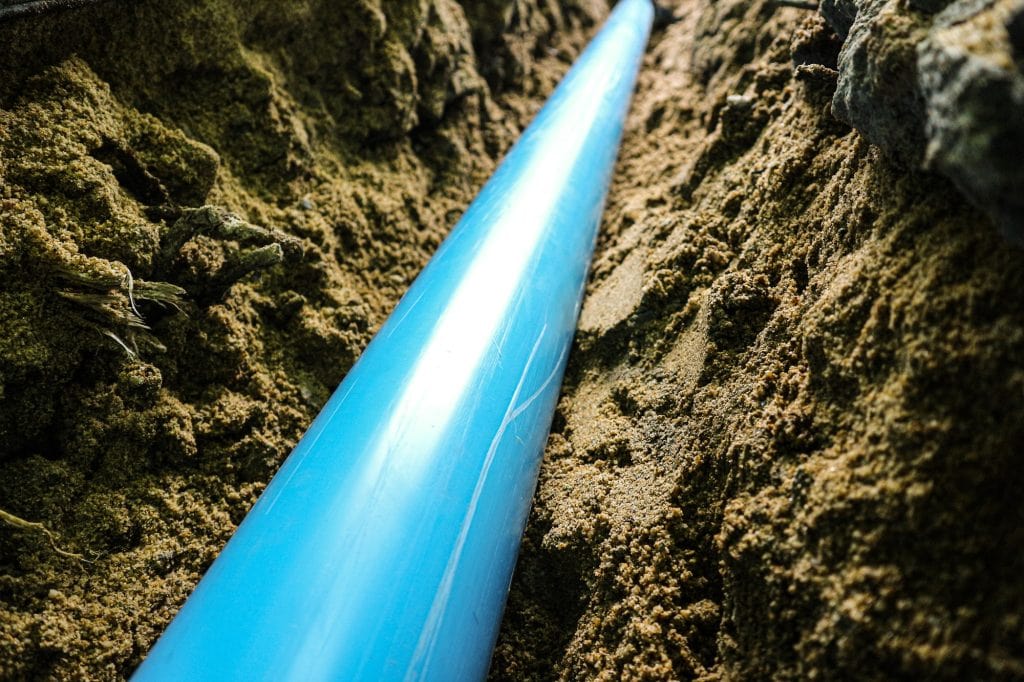
Running a new water line and unsure how deep to dig? Here’s what you’ll learn: why water line trench depth matters so much in Anchorage, what drives the required depth, and how a line is trenched to survive our winters.
Water line trench depth in Anchorage must place the pipe below the frost line so it can’t freeze. Because South Central Alaska’s frost penetrates deep, water service lines are buried far deeper than in warmer climates—the exact depth is set by local code and site conditions. A line buried too shallow freezes in winter, bursting pipes and cutting off water. Getting the depth and bedding right the first time is the difference between a line that lasts decades and one that fails every cold snap.
Why does water line depth matter so much in Anchorage?
Water freezes, and frozen water expands with enough force to split pipe and fittings. In Anchorage’s deep-frost climate, any water line above the frost line is at risk every winter. A frozen service line means no water to the home, and a burst line means excavation and repair in the worst possible conditions. Burying the pipe below the depth that freezes keeps the water inside it liquid and moving all winter—simple in principle, but it demands real depth in our soils.
How deep does a water line need to be buried?
Depth is governed by the local frost line and code, not guesswork. Anchorage’s frost reaches well below the surface, so water service lines are set deep enough to stay beneath it year-round, with margin for extreme winters. The required depth is defined by the Municipality of Anchorage and the serving utility, and it varies with soil, location, and whether the line is insulated. Several factors influence the final trench depth:
- Local frost line — the pipe must sit below it
- Code and utility requirements — set minimum burial depths
- Soil type — rocky or silty ground affects trenching and bedding
- Insulation — insulated lines or heat trace may adjust the approach
- Site grade and other utilities — depth is coordinated with the whole run
Always confirm current requirements before digging—guessing on depth is what leads to frozen lines.
How is a water line trench dug and prepared?
Trenching for a water line is more than a deep ditch. Done right, the process protects the pipe and everything around it:
- Locate utilities — mark all buried services before any digging.
- Excavate to depth — dig below the frost line with stable, safe trench walls.
- Bed the pipe — lay sand or approved bedding so the pipe rests evenly.
- Install and pressure-test — place the line, then verify it before backfill.
- Backfill and compact — restore the trench in layers to prevent settling.
Deep trenches in frozen or unstable soil require the right equipment and safety practices—our guide to safe utility trenching for underground line projects covers how crews dig deep without cave-ins. Professional trench digging services handle depth, bedding, and safety together. Properties in Chugiak and outlying areas often have long service runs where correct depth over the entire length is critical.
What happens if a water line is buried too shallow?
A shallow line is a winter emergency waiting to happen. When frost reaches the pipe, the water inside freezes, stopping flow and often bursting the line. Repair means locating the frozen or broken section, excavating in frozen ground, and replacing pipe—far more expensive and disruptive than burying it correctly at the start. If your line freezes every winter, the real fix isn’t thawing it again; it’s re-laying it below frost with proper bedding and, where needed, insulation.
Ready to run your water line right? Get a free estimate
Excavate Alaska proudly serves Anchorage and South Central Alaska—including Eagle River, Chugiak, Girdwood, Wasilla, and Palmer (plus the wider Anchorage metro and Matanuska-Susitna Borough). We trench, bed, and install water lines below frost so they last. Call (907) 336-7434 or visit our contact page for a no-pressure free estimate.
Frequently Asked Questions
How deep should a water line be buried in Anchorage?
A water line in Anchorage must be buried below the local frost line so it can’t freeze, which means digging far deeper than in warmer climates. The exact depth is set by the Municipality of Anchorage and the serving utility, and it varies with soil, insulation, and site conditions. Always confirm requirements before digging.
Why do water lines need to be below the frost line?
Water expands when it freezes with enough force to split pipe and fittings. Any line above the frost line can freeze in Anchorage’s deep-frost winters, cutting off water and often bursting. Burying the pipe below the depth that freezes keeps the water liquid and flowing all winter.
What determines how deep a water line trench needs to be?
The main factor is the local frost line, along with code and utility minimums. Soil type, whether the line is insulated or heat-traced, the site grade, and other nearby utilities also influence the final depth. Because these vary by property, the required depth is confirmed for each site before trenching.
What happens if a water line is buried too shallow in Alaska?
A shallow line freezes when frost reaches it, stopping water flow and frequently bursting the pipe. Repairing it means excavating in frozen ground and replacing pipe, which is far costlier than burying it correctly at first. A line that freezes every winter usually needs to be re-laid below the frost line.
How is a water line trench prepared?
Crews first locate buried utilities, then excavate below the frost line with safe trench walls, bed the pipe on sand or approved material, install and pressure-test the line, and backfill in compacted layers. Proper bedding and compaction protect the pipe and prevent settling over the trench.

As the owner and founder of Excavate Alaska, I’m passionate about delivering reliable, high-quality excavation services to the Anchorage community and beyond. With over a decade of hands-on experience in the industry, I’ve built Excavate Alaska on the values of integrity, professionalism, and customer-first service. My team and I specialize in site preparation, land clearing, grading, trench digging, and full-scale excavation for both residential and commercial projects.