
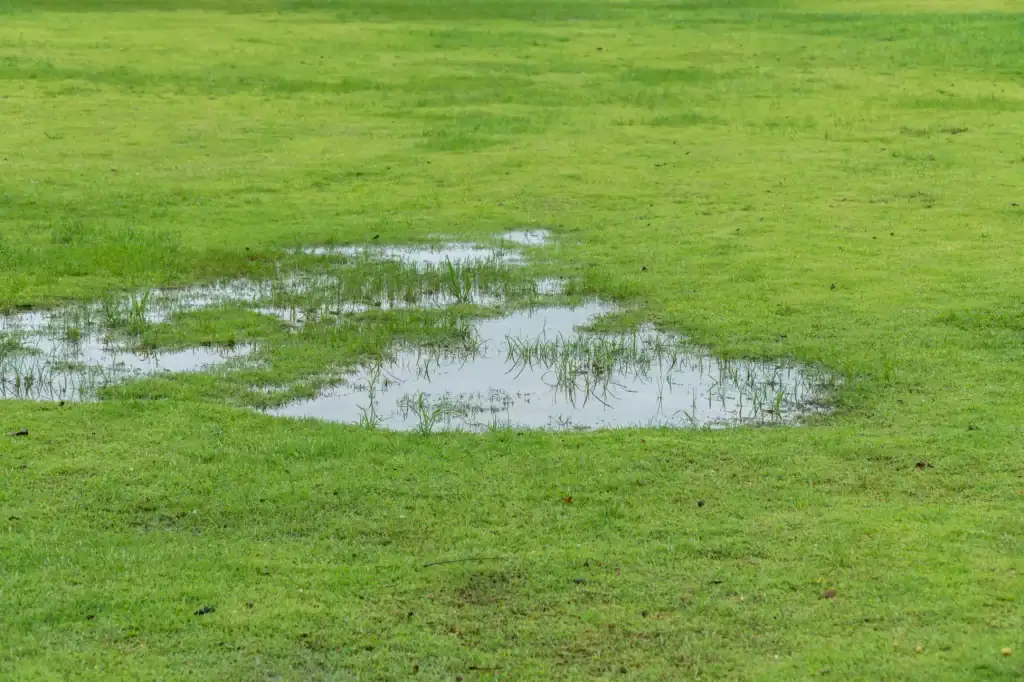
Tired of a swampy lawn and standing water? Here’s what you’ll learn: why Anchorage yards get soggy, the drainage solutions that fix it, and how to tell which one your yard needs.
Yard drainage in Anchorage solves soggy, waterlogged ground caused by poor grading, compacted or silty soil, snowmelt, and a high water table. The fix is to move water away from where it pools—through regrading, surface drains, French drains, or catch basins—matched to why the water is sitting there. A soggy yard isn’t just a nuisance; standing water erodes soil, kills grass, and can seep toward your foundation. Solving it starts with finding where the water comes from and where it needs to go.
Why does my Anchorage yard hold water?
Soggy yards almost always come down to water having nowhere to drain. In South Central Alaska, several conditions combine to trap it:
- Poor grading — the yard is flat or slopes toward the house
- Compacted or silty soil — glacial silt drains slowly
- Snowmelt and spring breakup — huge water volume over frozen ground
- High water table — groundwater sits close to the surface
- Downspouts and runoff — roof and paved water dumped in one spot
- Frost layer — thawing ground traps meltwater above still-frozen soil
Identifying which of these is at play determines the right fix—there’s no one-size solution.
What are the best drainage solutions for a soggy yard?
Different problems call for different solutions, and many yards need a combination. The table matches common fixes to what they solve:
| Solution | Best for |
|---|---|
| Regrading / crowning | Water pooling from poor slope |
| Surface drains / channel drains | Runoff on hard surfaces and low spots |
| French drain | Subsurface water and saturated soil |
| Catch basin + piping | Collecting and carrying water to an outlet |
| Downspout extensions | Roof water pooling near the foundation |
| Dry well | Dispersing collected water where it can soak away |
Managing where snowmelt and runoff go is especially important here—our post on driveway culvert installation shows how directing water at the source prevents pooling downstream.
French drain or surface drain—which do you need?
The choice depends on where the water is. Surface drains handle water sitting on top of the ground—runoff, low spots, and paved areas. French drains handle water in the soil—saturated ground, seepage, and a high water table—by giving subsurface water a gravel-and-pipe path to escape. Many soggy Anchorage yards need both: regrade and add surface drainage for runoff, plus a French drain where the soil stays wet. A drainage assessment identifies which problem you actually have before you dig.
Why fixing yard drainage protects more than your lawn
A soggy yard is an early warning. The same standing water that kills grass can erode soil, undermine walkways, and migrate toward your foundation, where it freezes, heaves, and cracks. In Anchorage’s freeze-thaw climate, unmanaged water near the house is one of the most common causes of foundation and basement problems. Fixing drainage protects your foundation, landscaping, and outdoor space at once. Professional drainage solutions diagnose the source and install the right system. Yards in Eagle River and on the Hillside, where slope and snowmelt concentrate water, especially benefit from a proper drainage plan. State Alaska DEC stormwater guidance applies when directing runoff near waterways.
Which approach is right for your yard?
If water simply pools after rain or melt because the yard is flat, start with regrading and surface drainage. If the ground stays saturated and soft well after the water should have drained, you need a French drain or subsurface system. If water threatens the house, prioritize downspout extensions and grading away from the foundation first. When in doubt, get an assessment—treating the wrong cause wastes money and leaves the yard wet.
Ready to dry out your yard? Get a free estimate
Excavate Alaska proudly serves Anchorage and South Central Alaska—including Eagle River, Chugiak, Girdwood, Wasilla, and Palmer (plus the wider Anchorage metro and Matanuska-Susitna Borough). We find the source of standing water and install drainage that lasts. Call (907) 336-7434 or visit our contact page for a no-pressure free estimate.
Frequently Asked Questions
Why is my yard so soggy in Anchorage?
Soggy yards come from water having nowhere to drain—usually poor grading, compacted or silty soil, heavy snowmelt over frozen ground, a high water table, or concentrated downspout runoff. In South Central Alaska these often combine, so identifying which cause is at play is the first step to fixing it.
What are the best drainage solutions for a wet yard?
Common solutions include regrading or crowning for slope problems, surface and channel drains for runoff, French drains for saturated soil, catch basins with piping to carry water to an outlet, downspout extensions, and dry wells. Many yards need a combination matched to why the water is pooling.
Should I install a French drain or a surface drain?
It depends on where the water is. Surface drains handle water sitting on top of the ground, such as runoff and low spots, while French drains handle water in the soil, such as seepage and a high water table. Many soggy Anchorage yards need both, so an assessment helps.
Can a soggy yard damage my foundation?
Yes. Standing water near the house can seep toward the foundation, where it freezes, heaves, and cracks—one of the most common causes of foundation and basement problems in Anchorage’s freeze-thaw climate. Fixing drainage and directing water away from the house protects the structure.
How do I stop standing water after snowmelt?
Snowmelt over frozen ground produces large water volumes with nowhere to soak in, so the fix is directing that water away with grading, surface drains, and catch basins routed to a safe outlet. Keeping downspouts extended and low spots drained prevents the pooling that spring breakup causes.

As the owner and founder of Excavate Alaska, I’m passionate about delivering reliable, high-quality excavation services to the Anchorage community and beyond. With over a decade of hands-on experience in the industry, I’ve built Excavate Alaska on the values of integrity, professionalism, and customer-first service. My team and I specialize in site preparation, land clearing, grading, trench digging, and full-scale excavation for both residential and commercial projects.