
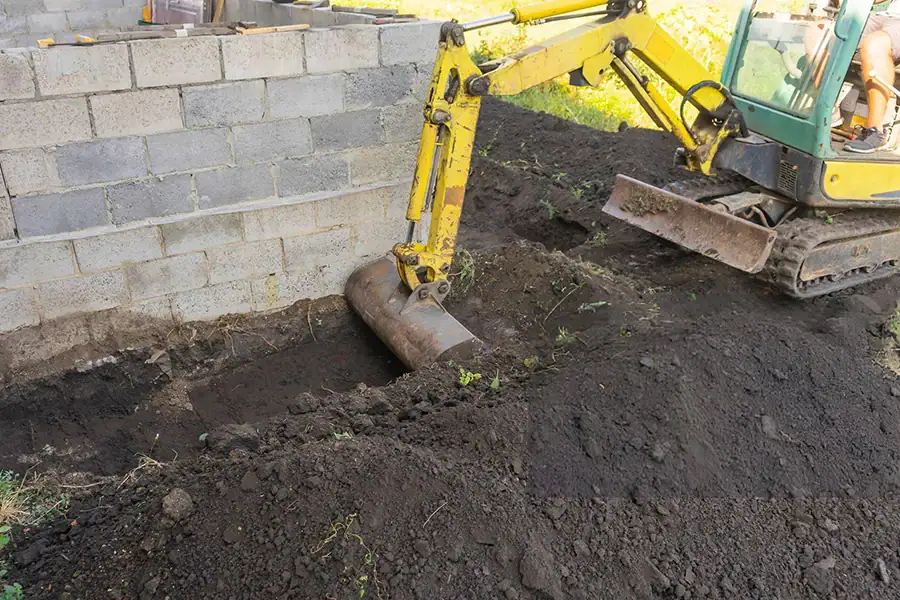
Anchorage’s dynamic soil conditions demand precise stabilization to shield foundations from settlement, uplift, and structural compromise. This guide delves into soil stabilization for foundation repair, covering what it involves, why it’s essential for lasting foundations, key techniques like helical piers, chemical grout injection, underpinning, and soil injection, factors for choosing the right method, how Excavate Alaska tackles these challenges locally, and the financial advantages of proactive stabilization. By the end, you’ll grasp how expert soil stabilization extends foundation life and why partnering with Excavate Alaska safeguards your property against Alaska’s unique soil issues.
What Exactly Is Soil Stabilization and Why Is It So Important for Foundation Repair?
Soil stabilization is the process of enhancing soil’s strength and load-bearing capabilities through mechanical, chemical, or structural means, preventing foundation movement, cracks, and settlement in unstable ground. By boosting shear strength, limiting water intrusion, and controlling expansion and contraction, stabilization ensures foundations rest on a solid, dependable base. For instance, stabilizing expansive clay soils beneath a home’s slab can prevent uneven settling and maintain structural integrity for decades.
How Does Unstable Soil Impact a Foundation’s Strength?
Soil instability compromises foundation integrity by creating uneven weight distribution, which leads to cracks, tilting, and differential settlement that threaten the structural safety.
- Shifting soils alter how loads are transferred, concentrating stress on foundation walls.
- Moisture-induced swelling and shrinking exert outward pressure on footings and slabs.
- Poorly compacted or organic soils lose their ability to support weight over time, allowing them to undergo downward movement.
These impacts underscore the importance of soil stabilization in preventing ongoing foundation damage and costly repairs.

What Typically Causes Unstable Soil in Anchorage, AK?
Anchorage’s specific geology creates distinct soil challenges that weaken foundation support:
- Repeated freezing and thawing near the surface causes soils to heave, creating gaps beneath slabs.
- Expansive clay layers swell when moist and shrink when dry, pushing against foundations.
- Inadequate compaction or fill material from prior digging can compress under weight.
- Saturated, poorly drained silty glacial soils lose strength and can settle unevenly under load.
Understanding these local factors clarifies why customized stabilization methods are vital for Anchorage properties.
How Does Soil Stabilization Make Foundations More Durable?
Soil stabilization boosts foundation durability by increasing load capacity, reducing volume changes, and minimizing water-related movement.
- Enhances shear strength to resist settlement under heavy loads.
- Decreases moisture absorption and shrink-swell cycles in clay soils.
- Prevents erosion around footings through soil densification and binding.
These improvements extend a foundation’s lifespan, ensuring a stable base for structures in Anchorage’s demanding environment.

What Are the Top Soil Stabilization Methods for Fixing Foundations?
Effective soil stabilization methods for foundation repair include installing helical piers, chemical grout injection, structural underpinning, and soil injection techniques, each addressing specific soil weaknesses by transferring loads, binding particles, or filling voids. Choosing the right approach ensures foundations achieve long-term stability and resilience against settlement, heave, and shifting soil layers.
Alaska Soil Stabilization Design Guide
This guide provides comprehensive information on various soil stabilization techniques applicable in Alaska, including asphalt, cement, lime, mechanical, and chemical methods. It discusses materials, design considerations, construction issues, and expected performance and costs for improving soil properties.
This guide offers a foundational understanding of soil stabilization methods specifically tailored for Alaskan conditions, supporting the article’s general discussion on effective stabilization techniques.
How Do Helical Piers Stabilize Foundations on Weak Ground?
Helical piers stabilize foundations by transferring structural loads from unstable surface soils to deeper, solid ground using screw-like shafts that are firmly anchored in stable earth.
- Minimal digging preserves existing landscaping and structures.
- Quick installation using hydraulic torque motors shortens project timelines.
- Adjustable pier lengths and capacities adapt to varying load requirements.
Helical piers offer dependable deep-foundation support for foundations that are sinking and areas with expansive clay.
A State-of-the-Art Review and Numerical Study of Reinforced Expansive Soil with Granular Anchor Piles and Helical Piles
This study investigates the performance of various foundation systems, including helical piles, in expansive soils. It highlights that expansive soils, characterized by significant volume changes due to fluctuations in moisture, pose a global geotechnical challenge, causing severe damage to infrastructure, such as building foundations.
This research provides academic support for the article’s claims regarding the challenges posed by expansive clay soils and the effectiveness of deep foundation systems, such as helical piers, in mitigating their impact.
What Is Chemical Soil Stabilization and How Does Grout Injection Work?
Chemical soil stabilization involves grout injection to alter soil characteristics by introducing polymers or cement-based materials that bind soil particles, increase density, and reduce expansion and contraction.
| Chemical Agent | How It Works | Key Benefit |
| Polyurethane Grout | Expands to fill gaps and compress soil | Rapid densification and control of uplift |
| Sodium Silicate Mix | Reacts with clay minerals to harden | Long-term resistance to moisture |
| Cementitious Slurry | Coats and binds soil grains | Increased shear strength and rigidity |
Chemical grout injection is highly effective for stabilizing expansive clay layers and filling underground voids, thereby protecting foundations from uneven movement.
When Is Foundation Underpinning Needed and What Are the Methods?
Foundation underpinning becomes necessary when existing footings can no longer support the load due to weak soils, increased structural demands, or nearby soil removal. It involves reinforcing the foundation by extending it to deeper, more stable ground.
- Mass concrete underpinning adds wider concrete bases to distribute loads over a larger area.
- Mini-piled underpinning uses small-diameter piles to support footings in tight spaces.
- Push piers are steel shafts driven into load-bearing soil layers for quick load transfer.
Underpinning provides robust support for foundations that are significantly compromised.
How Does Soil Injection Improve Foundation Stability?
Soil injection enhances foundation stability by injecting expanding polyurethane or cement-based grouts into voids and loose soils. This fills gaps, densifies the ground, and can lift settled foundations.
- A non-invasive process that avoids extensive digging.
- Fast-setting formulas enable structures to be reused within hours.
- Targeted injection addresses specific areas of settlement or voids beneath slabs.
Injection methods complement pier systems by strengthening soil continuity and preventing further movement.
What Solutions Address Foundation Damage from Expansive Clay Soil?
Solutions for expansive clay soil include moisture control barriers, chemical treatments, waterproof membranes, and deep foundation systems to counteract the effects of shrinking and swelling, and prevent soil movement.
- Installing vapor barriers reduces moisture fluctuations in clay subgrades.
- Chemical stabilizers treat clay layers to bind particles and reduce their tendency to expand or contract.
- Helical piers bypass active clay zones to anchor into stable ground.
- Polymer injection fills voids created by clay shrinkage and swelling.
Targeted treatments mitigate clay-related foundation damage and improve structural reliability.
How Do You Pick the Right Soil Stabilization Method for Your Foundation Repair?
Choosing the correct soil stabilization method involves assessing soil type, the severity of the damage, budget limitations, and project timelines to ensure the chosen technique provides lasting stability and cost-effective results.
| Method | Estimated Cost (Anchorage) | Lifespan (Years) | Installation Duration |
| Helical Piers | $1,200–$2,500 per pier | 75+ | 1–2 days |
| Chemical Grout Injection | $5,000–$15,000 per project | 20–30 | A few hours |
| Underpinning | $10,000–$25,000 per section | 50+ | 1–2 weeks |
Cost note: These figures are general planning estimates, not quotes, and lifespans are typical expectations, not promises. Actual pricing depends on an on-site evaluation, soil and access conditions, and the method chosen.
What Factors Guide the Selection of Soil Stabilization Techniques?
Key factors influencing the choice of stabilization method include the soil’s composition and plasticity, the extent of foundation damage, the project budget and available financing, and the required completion time for the repair. A thorough geotechnical report ensures all these factors are precisely evaluated and addressed.
How Do Different Methods Compare in Price, Durability, and Installation Speed?
Costs, longevity, and installation speed vary by method. Helical piers offer high durability at a moderate price and quick installation. Chemical injections are economical for localized fixes but have a shorter lifespan; underpinning provides long-term support, but at a higher cost and with a longer project duration. Balancing these aspects ensures optimal performance and value.
Why Is a Professional Assessment Crucial Before Soil Stabilization?
A professional assessment is vital before soil stabilization to conduct geotechnical analysis, determine load-bearing needs, and design a solution perfectly suited to the site conditions. Expert evaluation prevents incorrect diagnoses, ensures compliance with local building codes, and optimizes material choices for both cost-effectiveness and long-term performance.
How Does Excavate Alaska Deliver Expert Soil Stabilization and Foundation Repair Services?
Excavate Alaska combines in-depth knowledge of local soils, cutting-edge equipment, and a focus on customer needs to provide comprehensive soil stabilization and foundation repair solutions throughout Anchorage. Detailed site assessments, engineered designs, and complimentary consultations ensure property owners receive reliable stabilization tailored specifically for Alaskan soils.
What Unique Solutions Does Excavate Alaska Offer for Anchorage’s Soil Challenges?
Excavate Alaska’s distinctive solutions integrate expertise in seasonal frost heave and expansive clays with specialized piering and injection technologies. Custom pier lengths, mobile injection units, and strict adherence to municipal regulations deliver durable foundation support even in the most challenging conditions.
How Does Excavate Alaska Handle Helical Pier Installation?
Excavate Alaska performs helical pier installation by conducting soil probe tests, performing load-calculation analyses, and using hydraulic torque motors to drive screw-like piers into stable soil depths. Load testing confirms their capacity, ensuring each pier meets design specifications with minimal disruption to the site.
What Is Excavate Alaska’s Approach to Chemical Grout Injection and Underpinning?
Excavate Alaska’s method combines precise grout injection equipment with expertly engineered underpinning designs. Boreholes are drilled at strategic points, custom grout mixtures are injected under controlled pressure, and underpinning sections are extended to reach solid ground—effectively stabilizing foundations against expansive clay movements.
How Do Free Consultations and Estimates Benefit Customers?
Customers gain valuable insights from free consultations and estimates, which include expert site evaluations, detailed cost breakdowns, and recommended stabilization plans, all without any obligation. This transparent process empowers informed decision-making and simplifies project planning.
What Does Typical Soil Stabilization and Foundation Repair Work Look Like in Anchorage?
Typical projects include stabilizing settled corners or slabs with piers or injection, correcting drainage that keeps soil under a foundation saturated, and rebuilding subgrades with compacted, non-frost-susceptible fill and geotextile separation before new slabs or additions. The right combination depends on what an on-site evaluation finds.
What Makes a Good Subgrade Under a Foundation or Slab?
Stabilization is easier to plan when you know what you are aiming for. Under slabs, garage floors, pads, and driveways, a dependable subgrade has:
- The right mix of particle sizes: Enough coarse material to drain and resist compaction under load. Silty soils common around Anchorage hold water and are frost-susceptible.
- Stable bearing: Supports the load without rutting, pumping, or heaving.
- Controlled moisture: Grading and capillary breaks keep water moving away from the structure instead of soaking the soil under it.
- Little or no organic material: Topsoil and organics belong in planting areas, not under footings or slabs, because they compress over time.
How Is Soil Tested Before Stabilization?
Most residential work starts with a field assessment: probing for soft or loose zones, checking compaction, and watching where water enters and lingers. Lab testing, such as particle size distribution and organic content, makes sense when you are investing in a significant slab or hardscape, when contamination is suspected, or when a build needs documented specifications. Larger or engineered projects may call for a geotechnical report.
What Is Mechanical Soil Stabilization?
Mechanical stabilization improves the subgrade physically rather than chemically. It is often the first and most cost-effective step for new slabs, additions, and pads:
- Moisture conditioning: Bringing soil close to its optimum moisture content before compaction so it reaches full density.
- Compaction in lifts: Placing and compacting material in thin layers instead of one deep pass.
- Geotextiles: Fabric that separates base rock from fine soils so silt does not migrate up and weaken the base.
- Geogrids: Reinforcing grids that stiffen the base over soft subgrades.
- Chemical binders when appropriate: Lime or cement can dry and stiffen fine-grained soils on some projects, where permitted and beneficial.
How Is a Layered Sub-Base Built Under a Slab or Pad?
For garages, additions, sheds, and paver areas, we build from the bottom up:
- Subgrade: Native or placed soil is shaped and moisture-conditioned.
- Separation layer: Geotextile keeps fines out of the base rock.
- Base course: Well-graded aggregate compacted in lifts. Washed gravel can serve as a capillary break that interrupts upward moisture movement.
- Slab or setting bed: Placed on a platform that drains and resists frost movement.
Frost-susceptible silts are one of the main reasons slabs heave in Anchorage. Our post on foundation frost heave in Anchorage covers how drainage, insulation, and non-frost-susceptible fill help.
When Should Unsuitable Soil Be Removed and Replaced?
Sometimes the best fix is to take the bad material out. Over-excavation and replacement makes sense when soils are highly organic, saturated silts that will not compact, old uncontrolled fill, or contaminated. The process is selective excavation, disposal at an approved facility, and rebuilding with verified clean import compacted in lifts, with drainage built in.
Why Drainage Comes Before or Alongside Stabilization
Stabilized soil can still lose strength if water keeps saturating it. Grading should move water away from the foundation, with at least 6 inches of fall in the first 10 feet as building codes generally require. Depending on the site, French drains, daylighted footing drains, curtain drains, dry wells, or catch basins may be needed. During the work, silt fence and inlet protection keep disturbed soil on site and out of storm drains.
When Is the Best Time of Year for Soil Work in Anchorage?
Late spring through early fall is easiest, because unfrozen soil is simpler to moisture-condition and compact. A practical sequence is grading, drainage, stabilization, and base prep in late summer or fall before freeze-up, with limited excavation in winter on suitable sites. Frozen material should never be used as fill or compacted under a slab.
If you are seeing cracks, sloping floors, or sticking doors and are not sure soil is the cause, start with our guide to warning signs your Anchorage home may need foundation repair, and compare structural options in piering vs. slab jacking.
What Are the Most Common Questions About Soil Stabilization for Foundation Repair?
Clients frequently inquire about the chemicals used in stabilization. Common agents include polyurethane resins, sodium silicate, and cement-based slurries, which bind soil particles and manage moisture. Typical stabilization results are visible within 24–72 hours as grouts cure and bind soils. Proper stabilization prevents future settlement by increasing soil strength and minimizing volume changes. Soil injection remains a minimally invasive repair option, and helical piers offer advantages over other methods by providing adjustable load capacity, minimal excavation, and rapid installation for sinking foundations.
Do I Need Lab Testing Before Soil Stabilization?
Not always. Many residential projects can be planned from a field assessment. Lab testing is worth it for significant slabs or hardscape, suspected contamination, or when a build needs documented specs.
Can I Just Add Gravel on Top of Soft Soil?
Usually not by itself. Without a geotextile separation layer, silt pumps up into the gravel over time and the base loses strength. The subgrade also needs to be moisture-conditioned and compacted first.
Can Soil Stabilization Be Done in Winter?
Some work, such as planning, limited excavation, and erosion control, can happen in cold weather on suitable sites. Compaction and base building are best done before freeze-up, because frozen soil cannot be properly compacted.
Will Fixing Drainage Alone Stop My Foundation From Moving?
Sometimes. If movement comes from surface water or shallow groundwater, regrading, extending downspouts, and adding drains can make a big difference. If the soil under the footing is already weak or has voids, stabilization or piers may also be needed.
How Does Soil Stabilization Affect Foundation Repair Costs and Long-Term Property Value?
Investing in soil stabilization reduces immediate repair expenses, lowers future maintenance needs, and enhances property value by ensuring a stable foundation. Properly stabilized soils prevent recurring settlement problems, preserve structural integrity, and avoid costly major repairs.
What Is the Typical Cost Range for Soil Stabilization Methods in Anchorage?
As general planning estimates (not quotes), Anchorage cost ranges vary: $1,200–$2,500 per helical pier, $5,000–$15,000 for chemical injections, and $10,000–$25,000 per underpinning section, reflecting the project’s scope and the method’s complexity.
How Does Effective Soil Stabilization Cut Future Repair Expenses?
Effective soil stabilization reduces future costs by eliminating the need for repeat settlement repairs, minimizing structural crack remediation, and avoiding moisture damage mitigation, resulting in a lower overall cost of ownership throughout a building’s life.
Why Is Investing in Soil Stabilization Essential for Property Durability?
Investing in soil stabilization is critical because a stable foundation prevents progressive structural damage, maintains resale value, and ensures safety. Foundations built on properly stabilized soils offer peace of mind and long-term performance in Anchorage’s challenging environment.
Reach out to Excavate Alaska today for a complimentary consultation and learn how expert soil stabilization methods can secure your foundation’s future stability and enhance your property’s value. Our local expertise and advanced solutions make us the go-to partner for foundation repair in Anchorage.

As the owner and founder of Excavate Alaska, I’m passionate about delivering reliable, high-quality excavation services to the Anchorage community and beyond. With over a decade of hands-on experience in the industry, I’ve built Excavate Alaska on the values of integrity, professionalism, and customer-first service. My team and I specialize in site preparation, land clearing, grading, trench digging, and full-scale excavation for both residential and commercial projects.