
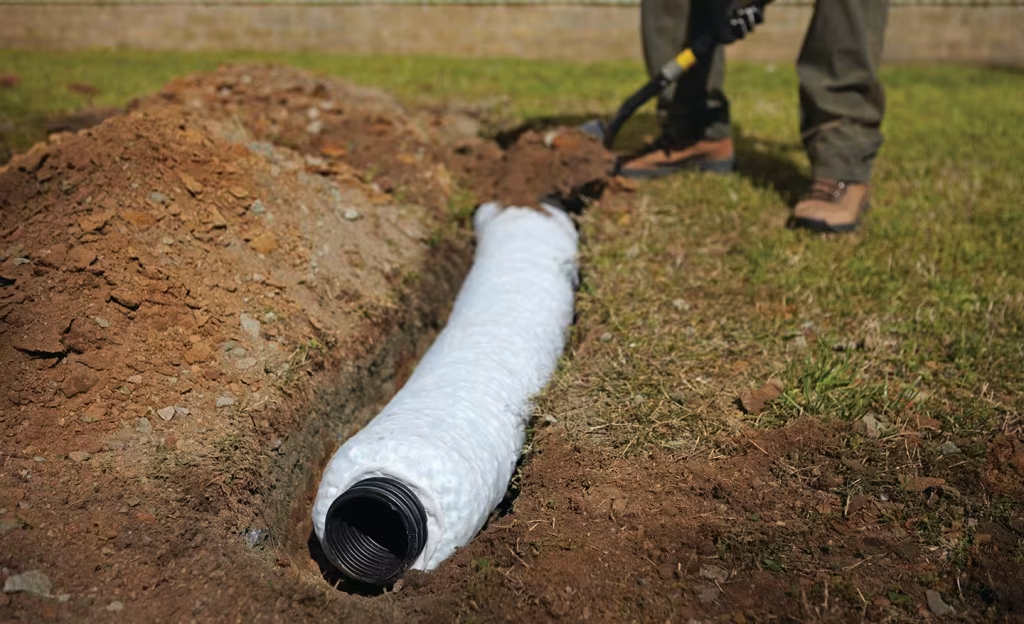
Why trench design—not just pipe—makes the drain
French drains fail when trenches are undersized, poorly sloped, packed with fines, or wrapped in the wrong fabric. In Anchorage, freeze–thaw cycling and seasonal saturation raise the stakes. Properly designing the trench width, depth, bedding, and fabric is essential to ensure your pipe functions correctly. Pair your plan with Drainage Solutions and smart Land Grading to keep water moving away from the home.
The big picture: trench anatomy at a glance
- Excavation: clean, straight trench with uniform base
- Separation: geotextile/fabric to keep soil fines out of the stone bed
- Bedding & stone: clean, washed aggregate sized for flow and void space
- Perforated pipe: laid true to slope, with correct orientation
- Backfill finish: stone to top of trench, fabric wrap (if used), and surface treatment (soil, river rock, or sod)
If you’re not sure about safe digging depths and access, see Trench Digging.
Trench width: give water a lane, not a straw
Goal: enough cross-section for water to enter quickly and spread through the stone.
- Typical residential range: ~12″ to 18″ wide for yard drains; go wider (18–24″) where flows are high, or soils are fine/silty.
- Near structures: consider a bit wider to maximize stone volume and reduce inflow velocity against foundations.
- At transitions: widen where multiple surface flows converge or where you add cleanouts.
A too-narrow trench chokes intake and clogs faster because the stone volume is small and fines overwhelm it.
Trench depth: intercept water without inviting frost issues
Goal: reach the water path you’re targeting while preserving grade and outlet slope.
- Common yard drains: bottom of trench often 18″–30″ below finish grade, deeper where needed to intercept perched water lines.
- Against foundations: maintain foundation-safe separations; the drain should relieve water, not undermine bearing soils.
- Outlet control: depth must allow a continuous slope to a legal outlet or daylight. No flat spots, no bellies.
If the site stays saturated, coordinate trench depth with French Drain layouts and confirm your outlet elevation before you dig the first foot.
Slope: the quiet difference between “works” and “doesn’t.”
- Target minimum: a steady, gentle fall from start to outlet.
- Consistency beats steepness: a perfectly even slope moves water without letting fines settle in low spots.
- Set the grade first: stringline or laser; check every few feet. Correct dips immediately.
Bedding and clean stone: let the voids do the work
Use washed, angular aggregate—“clean stone”—so voids stay open and move water.
- Standard sizes: ¾” clean (very versatile) or 1″–1½” where you want bigger voids and flow.
- Why “clean” matters: stone with fines behaves like concrete, trapping water and mud.
- Bedding thickness: start with 2–4″ of clean stone under the pipe to protect grade and add flow capacity.
- Backfill: bring clean stone up above the pipe crown; many drains perform best when filled with stone to near-surface.
If the trench base is soft or silty, install a separation layer of geotextile first to prevent subgrade fines from being pumped into the stone.
Pipe choices & orientation (quick, practical)
- Perforated pipe: rigid PVC or quality flex; perforations oriented per design (many pros run holes down with a stone bed so water enters and the pipe drains).
- Slots vs. round holes: either can work with proper stone and fabric; keep the system consistent.
- Cleanouts: add vertical cleanouts at direction changes and long runs for maintenance access.
Fabric (geotextile): filter fines without smothering flow
Fabric is about separation and filtration—not wrapping everything in a plastic burrito that plugs.
- Where to use:
- Line the trench walls and base to separate soil from stone, then fold over the top before your surface layer, or
- Wrap just the stone envelope (not always the pipe) where soils are excellent.
- What to avoid:
- Plastic sheeting or non-breathable barriers (they trap water).
- Ultra-tight weaves that clog rapidly in silty soils.
- Look for: geotextiles rated for drainage with appropriate permittivity and apparent opening size (AOS) for your soil type.
In many Anchorage yards, lining the trench and folding fabric over the top stone layer strikes the right balance: it keeps fines out but lets the trench breathe.
Finishing the top: lawn, rock, or a “dry creek”
- Sod/soil finish: stop the stone a few inches below grade, fold fabric over, add a thin soil layer, and sod/seed. Keep the crown subtle so water still drains.
- Decorative stone: fold fabric over the top stone and cap with river rock—great for visible edges along Concrete Sidewalks or patios.
- Dry creek bed: shape a shallow swale with river rock to hide a high-capacity drain beneath.
Whichever finish you choose, maintain a positive surface slope toward the drain in wet zones and away from the house.
Where to route the outlet (and what not to do)
- Best: legal discharge to daylight on your property, a designed dry well, or an approved storm feature.
- Avoid: sending flows toward neighbors, burying the outlet below standing water, or ending the pipe where snow berms block flow.
- Protect: add rodent/screen guards; ensure winter access so you can check the outlet after storms.
When to add catch basins or swales
- Catch basins: good where concentrated surface water (like downspouts) hits the yard; connect to the French drain line with proper sump depth.
- Swales: shallow, graded channels that carry sheet flow to your drain or daylight; pair swales with the drain for heavy areas.
- Downspouts: often better tied to their own solid pipe rather than into a perforated line, so roof water doesn’t overload the stone bed.
Anchorage climate notes: freeze–thaw realities
- Keep lines and outlets clear before freeze-up.
- Don’t trap water above the freezing layer; preserve a consistent slope.
- Protect fresh trenches from heavy traffic during thaw to prevent rutting and fabric breach.
- Time your work in the summer window when soils are stable, and inspections move quickly.
Common mistakes (and quick fixes)
- Using “minus” (stone with fines): voids fill, trench clogs. Fix: swap for a washed, angular-clean stone.
- Too-narrow trench: low capacity and faster clogging. Fix: widen and add more stone volume.
- Flat runs or bellies: water and silt collect. Fix: re-grade to a steady fall; add cleanouts.
- Over-wrapping with tight fabric: starves flow. Fix: switch to drainage-rated geotextile and line/fold instead of a choke wrap.
- Combining downspouts into perforated runs: overloads the system. Fix: separate the roof water from the solid pipe and direct it to a safe outlet.
Simple pre-dig checklist (print this)
- Confirm outlet elevation and legal discharge
- Mark utilities; plan access routes for spoil and stone
- Set trench line and consistent slope with string/laser
- Stage-washed clean stone and drainage-rated geotextile
- Plan cleanouts at bends/long runs
- Decide on surface finish (soil/sod vs. decorative rock)
- Walk the yard for positive surface grading toward drains and away from the house
Need help with layout or installation? Start with French Drain and Drainage Solutions. For digging support, tap Trench Digging.
FAQs
1) How wide should my French drain trench be?
For most yards, 12″–18″ works; go wider where flows are heavy, or soils are fine/silty to boost stone volume and intake.
2) How deep should I dig?
Often 18″–30″ to intercept water and maintain outlet slope. Depth depends on your yard’s grades and where the water sits.
3) What stone is best?
Use a washed, angular, clean stone—¾” is versatile. Avoid fines; they cement together and clog the trench.
4) Do I wrap the pipe in fabric?
Not always. Many installers line the trench with geotextile, place stone and pipe, then fold fabric over the top of the stone. The goal is to separate soil from stone, not choke the system.
5) Can I tie roof gutters into my French drain?
Prefer a separate solid line for downspouts to a safe outlet. Perforated French drains handle groundwater; mixing roof flows can overwhelm them.

As the owner and founder of Excavate Alaska, I’m passionate about delivering reliable, high-quality excavation services to the Anchorage community and beyond. With over a decade of hands-on experience in the industry, I’ve built Excavate Alaska on the values of integrity, professionalism, and customer-first service. My team and I specialize in site preparation, land clearing, grading, trench digging, and full-scale excavation for both residential and commercial projects.